




 Аюрведические капсулы
 Аюрведические порошки
 Комплекты
 Питомцы
 Здоровье женщин
 Здоровье мужчин
 Бесплодие
 Пищеварение
 Детоксикация
 Паразиты
 Долголетие и омоложение
 Дыхательная система
 Кожа
Кожа Мочевыделительная и репродуктивная система
 Нервная система и мозг
 Кровеносная система
 Опорно-двигательная система
 Bundles
 Men’s health
 Sleep, stress, nerves
 Endokriinsüsteem
 Pea, hambad ja suuõõs
 Naiste tervis
 Meeste tervis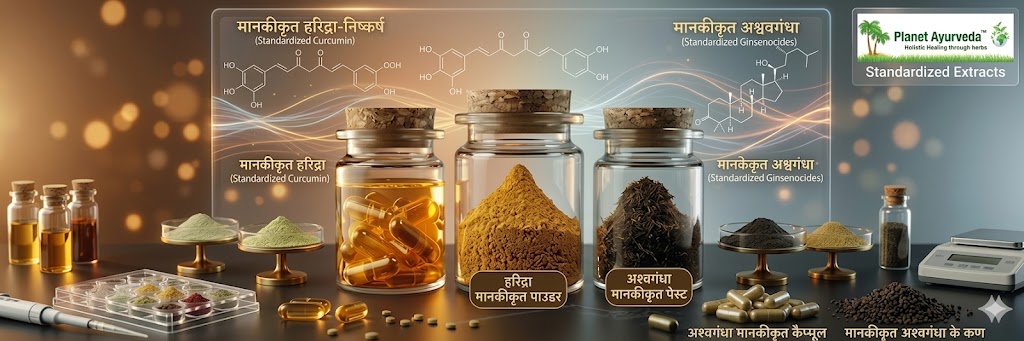
Planet Ayurveda® uses standardized herbal extracts as a deliberate foundation of its products, combining the principles of classical Ayurveda with modern requirements for quality, consistency, and safety.
The approach of Dr. Vikram Chauhan
The founder and CEO of Planet Ayurveda®, practicing Ayurveda physician Vikram Chauhan, explains:
“Classical Ayurvedic texts state that an effective dose of pure herbal powder ranges from 3 to 6 grams per day. Such quantities are not practical in capsule form.
For this reason, herbal extracts become especially important in low-dose formats such as capsules. I have been using both powdered herbal formulations (churnas) and extract-based preparations in my clinical practice for more than 25 years, with consistently stable and reproducible outcomes.”
This long-standing clinical experience forms the basis for Planet Ayurveda® products formulated with standardized extracts.
The extraction process
Extraction refers to the technological process of isolating biologically active compounds from plant raw materials.
Appropriate solvents such as water, alcohol, or their combinations are used, depending on the nature of the target compounds. The choice of solvent is crucial, as different phytochemicals exhibit different solubility profiles.
The process involves:
- separating soluble compounds from plant tissues,
- concentrating the resulting solution,
- obtaining liquid or solid extracts.
Depending on the method, extracts may be classified as aqueous, alcoholic, or combined extracts.
What is a standardized herbal extract
A standardized herbal extract is an extract that contains a defined and controlled amount of specific active compounds or marker substances.
For example, a standardized Ashwagandha (Withania somnifera) extract contains at least 1.5% withanolides.
Standardization:
- ensures controlled levels of key constituents,
- reduces natural variability,
- provides consistency between production batches.
Importantly, standardization involves more than specifying percentages; it represents a comprehensive system of quality control.
Analytical control and quality assurance
A key component of standardization is analytical testing, performed using recognized methods such as:
- high-performance liquid chromatography (HPLC),
- gas chromatography (GC),
- thin-layer and liquid chromatography.
Extracts may be standardized to:
- individual active compounds,
- groups of compounds,
- or marker substances when the primary actives have not been fully identified.
Why Planet Ayurveda® chooses standardized extracts
Standardized extracts preserve the natural chemical complexity of plants while providing greater control over quality and consistency.
Modern scientific and clinical practice shows that the majority of herbal clinical studies are conducted using standardized extracts, as they allow for reproducible and comparable results.
Comparison with non-standardized plant materials
Plants are living organisms, and even within the same species, chemical composition may vary significantly due to environmental conditions, soil, and harvesting time.
Using non-standardized raw materials may result in inconsistent activity and unpredictable outcomes. Standardized extracts used by Planet Ayurveda® help minimize these variations.
Advantages of standardized extracts in Planet Ayurveda® products
- consistent levels of defined active constituents;
- quality control at every stage — cultivation, harvesting, and production;
- batch-to-batch consistency;
- high standards of purity and safety.
Practical and clinical advantages
Standardized extracts used in Planet Ayurveda® capsule formulations are characterized by:
- stable activity,
- predictable performance,
- improved dosing accuracy,
- rigorous quality and safety control.
These factors make standardized extracts a core element of Planet Ayurveda® products.